

Dry and wet fire columns: what is the difference and what are they used for?
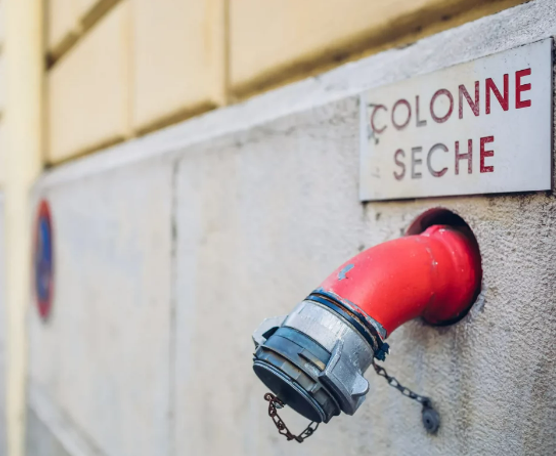
Dry and wet risers are essential equipment in buildings, particularly high-rise buildings and underground parking lots. They enable firefighters to quickly deliver water as close as possible to a fire.
🏢 What is a dry column?
A dry column is an empty metal conduit installed in a building. It is equipped with outlets:
- downstairs (usually at the entrance to the building) so that firefighters can connect their water supply hose,
- on each floor so they can connect their hoses.
👉 It is only filled with water when needed, hence its name.
💧 What is a wet column?
A wet column, on the other hand, is constantly filled with pressurized water, ready for use at any time. It is connected to a water supply (city network or reservoir) and requires continuous monitoring.
👉 It is often used in very large buildings, where rapid response is crucial.
- Mandatory in buildings over 28 meters high (for dry columns).
- Reference standard: NF S 61-759 for installation.
- The columns must be inspected periodically by certified professionals.
✅ Why it matters
- Facilitates access to water for firefighters on upper floors or in difficult areas.
- Avoid having to unroll long hoses from the ground floor.
- Saves valuable time in controlling a fire.
Article écrit par le service expertise Eurofeu
Read our other articles here! :