

How to use a dry powder extinguisher

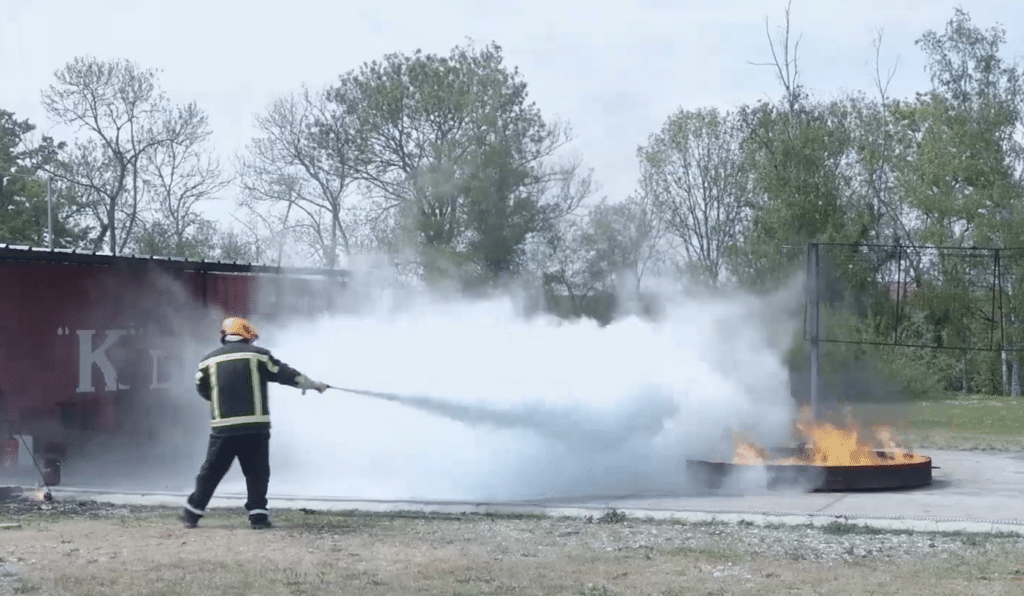
Powder extinguishers are versatile and effective in extinguishing many types of fire, including Class A (solid materials), B (flammable liquids) and C (flammable gases). With a special powder, they can also be used on Class D fires. Here's a detailed guide to the correct use of a dry powder extinguisher in the event of a fire.
Steps for using a dry powder extinguisher
1. Identify the type of fire
Before using an extinguisher, make sure it's suitable for the type of fire you're dealing with:
- Class A: Fires involving solid materials such as wood, paper and fabric.
- Class B: Fires involving flammable liquids such as petrol and oil.
- Class C: Fires involving flammable gases such as propane and butane.
- Class D: Combustible metal fires such as magnesium and sodium.
2. Check fire extinguisher
Before use, check that the extinguisher is in good condition:
- Pressure gauge (for permanent pressure): Check that the needle on the pressure gauge is in the green zone, indicating that the extinguisher is under pressure.
3. Use and handling
- Remove the safety pin
- To pressurize the extinguisher, operate the handle
- Point the extinguisher and pull the nozzle trigger
Specific precautions
- Do not breathe powder: Avoid breathing fire extinguisher powder, as it can be irritating to the respiratory tract.
- Ventilation: Use the extinguisher in a well-ventilated area to prevent the build-up of airborne powder.
- Vertical position: Keep the extinguisher in a vertical position to ensure a constant flow of extinguishing agent.
- Monitoring the area: Even after the fire is apparently out, keep an eye on the area to prevent any recurrence.
Article écrit par le service expertise Eurofeu
Read our other articles here! :