

Fire extinguishers: role, regulations, and use
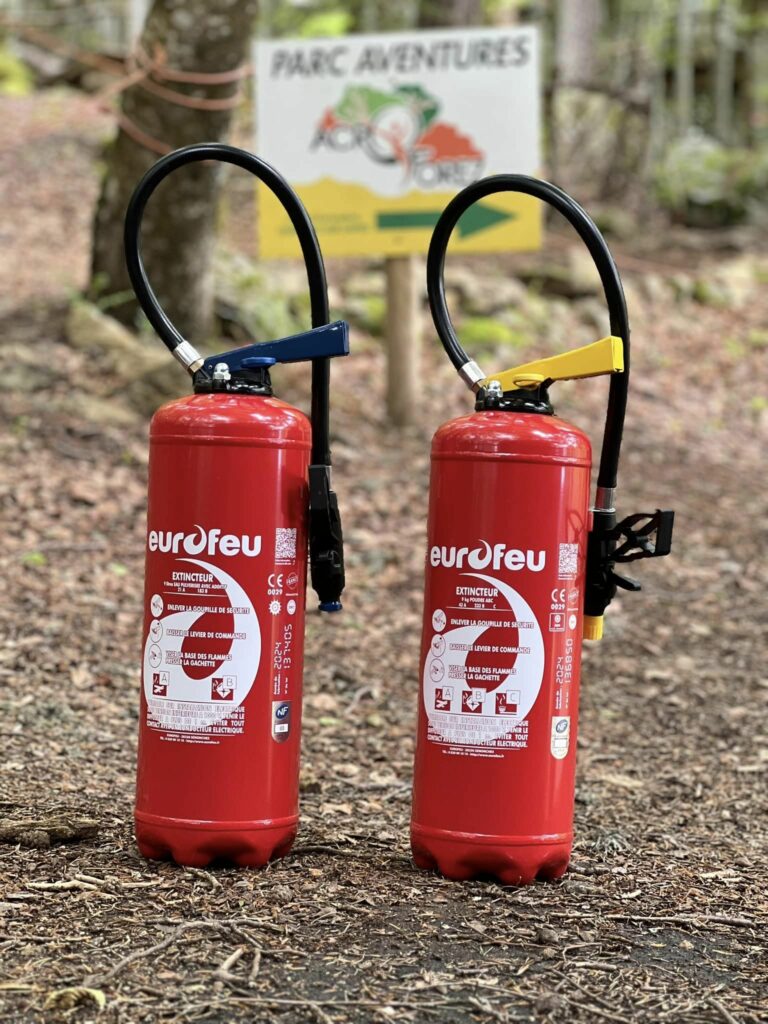
Fire extinguishers are essential devices for fire safety. They enable you to extinguish or limit the spread of a fire in its early stages, before the emergency services arrive. Here is a comprehensive overview of their role, regulations, and use:
- The role of fire extinguishers
Fire extinguishers are designed to combat the early stages of a fire using different extinguishing agents. Depending on their type, they can be used to extinguish different types of fires, whether solid (paper, wood), liquid (oil, solvents), or gaseous (flammable gases). They are particularly effective when used on incipient fires, before they become uncontrollable.
- Types of fire extinguishers and their uses
There are several types of fire extinguishers, each designed for a specific type of fire. They are distinguished by their extinguishing agent:
- Water extinguishers: Ideal for Class A fires (solids such as wood and paper). They should not be used on fires involving flammable liquids or gases.
- Powder extinguishers: Highly versatile, they can be used for Class A, B (flammable liquids), and C (gas) fires. However, they leave residue and can damage certain electronic equipment.
- Carbon dioxide (CO₂) fire extinguishers: Used for Class B and C fires, including electrical fires and flammable liquids. They leave no residue and are effective on live electrical equipment.
- Foam extinguishers: Effective against Class A and B fires, particularly fires involving flammable liquids (gasoline, solvents). They are less polluting and suitable for industrial hazards.
Regulations concerning the installation and maintenance of fire extinguishers vary depending on the type of building and its activity. In France, fire extinguishers are governed by standard NF S 61-922 and must be installed in accordance with the following requirements:
- Number of fire extinguishers: Depending on the size and layout of the building, a certain number of fire extinguishers must be installed. For example, a fire extinguisher must be placed no more than 15 meters from any point in the building.
- Location of fire extinguishers: They must be installed in clearly visible, accessible, and unobstructed locations. In establishments open to the public, their location must be indicated by signage.
- Inspection and maintenance: Fire extinguishers must be inspected annually by a certified professional. A visual inspection is also required monthly to verify that they are in good condition, full, and unobstructed.
- Use of extinguishers
Here are the basic steps for using a fire extinguisher effectively:
- Pull the pin: Remove the safety pin located on the handle of the fire extinguisher. This releases the mechanism.
- Point the nozzle at the fire: Aim the fire extinguisher nozzle at the base of the fire. It is important to target the source of the fire to be effective.
- Press the handle: Press the handle to release the extinguishing agent. It is recommended to release the agent in pulses, trying to direct the spray in sweeping movements.
- Maintain a safe distance: Keep at least 1 to 2 meters away from the fire to avoid putting yourself in danger. If the fire becomes too large or if the extinguisher is empty, it is important to evacuate and call for help.
- Training in the use of fire extinguishers
It is essential to train employees or occupants of a building in the use of fire extinguishers. This training enables them to react quickly in the event of a fire and limit the risks. Practical exercises and fire drills are effective ways of providing this training.
Conclusion
Fire extinguishers are essential firefighting equipment, crucial for protecting people and property in the event of a fire. Compliance with regulations, regular maintenance, and user training are crucial aspects of ensuring their effectiveness.
Article écrit par le service expertise Eurofeu
Read our other articles here! :