

Sprinklers and automatic fire extinguishing systems: how do they work?
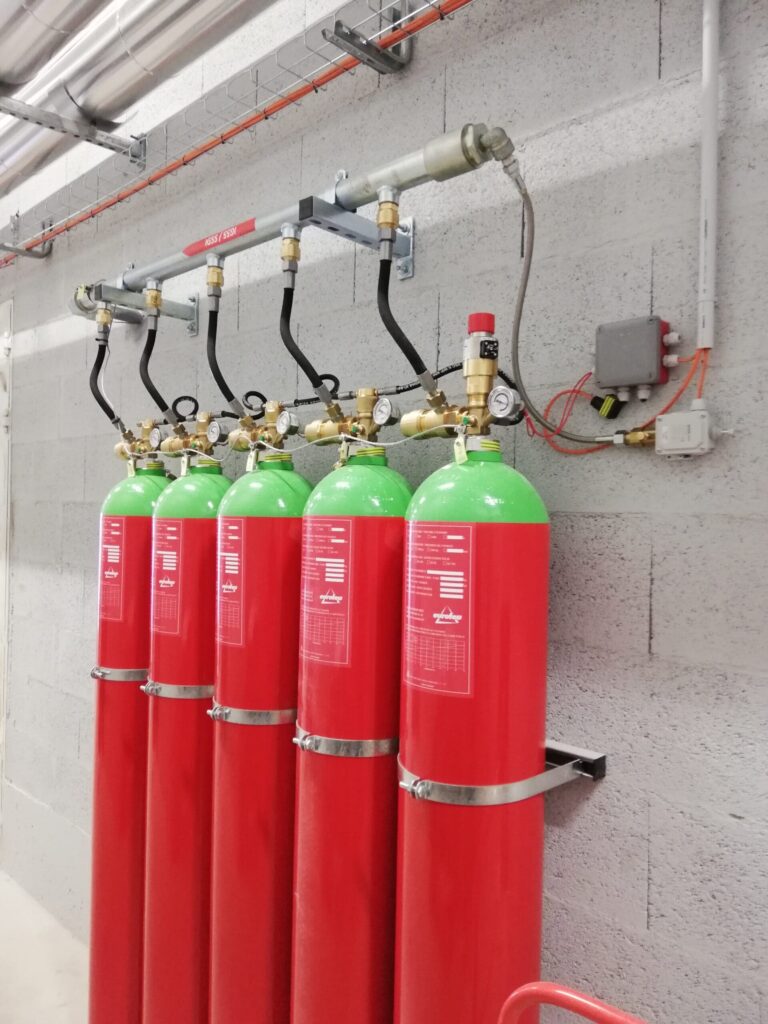
Automatic extinguishing systems (such as sprinklers) are essential devices for fighting a fire in its early stages, even before human intervention.
A sprinkler is a nozzle connected to a pressurized water system. When a fire breaks out, the heat causes a bulb inside the sprinkler to burst (usually at around 68°C). This immediately triggers the spraying of water onto the affected area.
Contrary to popular belief, not all sprinklers activate at the same time: only those located above the fire are activated, limiting water damage.
🛠️ The different automatic extinguishing systems
- Automatic water sprinklers: the most common type in commercial and industrial buildings.
- Water mist systems: spray microdroplets that absorb heat and limit oxygen supply.
- Gas systems (Inergen, CO₂, etc.): used in sensitive areas (computer rooms, archives) because they do not damage equipment.
- Foam extinguishing: effective for flammable liquids, often used in warehouses or petrochemical sites.
- Powder systems: less common, used in specific industrial environments.
⚖️ Regulations and obligations
The implementation of these systems is subject to current regulations, particularly in:
- Public Access Buildings (PAB),
- High-rise buildings (IGH),
- Classified industrial sites or sites with specific risks.
The design and installation must comply with specific standards such as NF EN 12845 for sprinklers.
✅ Why install them?
- Reducing human risk: limiting the spread before emergency services arrive.
- Protection of property: minimizing material damage.
- Reduced insurance premiums: many companies value these systems.
- Regulatory requirement in certain sectors or types of buildings.
Read our other articles here! :